


A Reinforced Composite Structure for Thermal Stability, Erosion Resistance and Contamination Control
In high-temperature sintering processes, unstable gas flow, furnace pressure fluctuations, particulate contamination, and insulation degradation can affect process stability and product quality.
Conventional carbon fiber rigid felt tubes may experience surface erosion, fiber shedding, or structural deformation under prolonged exposure to high temperatures, gas-flow impact, and repeated thermal cycling. These issues can increase maintenance frequency and create potential contamination risks.
To address these challenges, XINGHUI Materials has developed Sandwich Carbon Fiber Rigid Felt, a reinforced composite insulation structure combining multi-layer rigid carbon cloth, a Graphite Foil interlayer, and a carbon fiber rigid felt core.
Designed for demanding furnace environments, this composite structure integrates mechanical reinforcement, thermal management, and gas-flow control to improve insulation reliability and service performance.
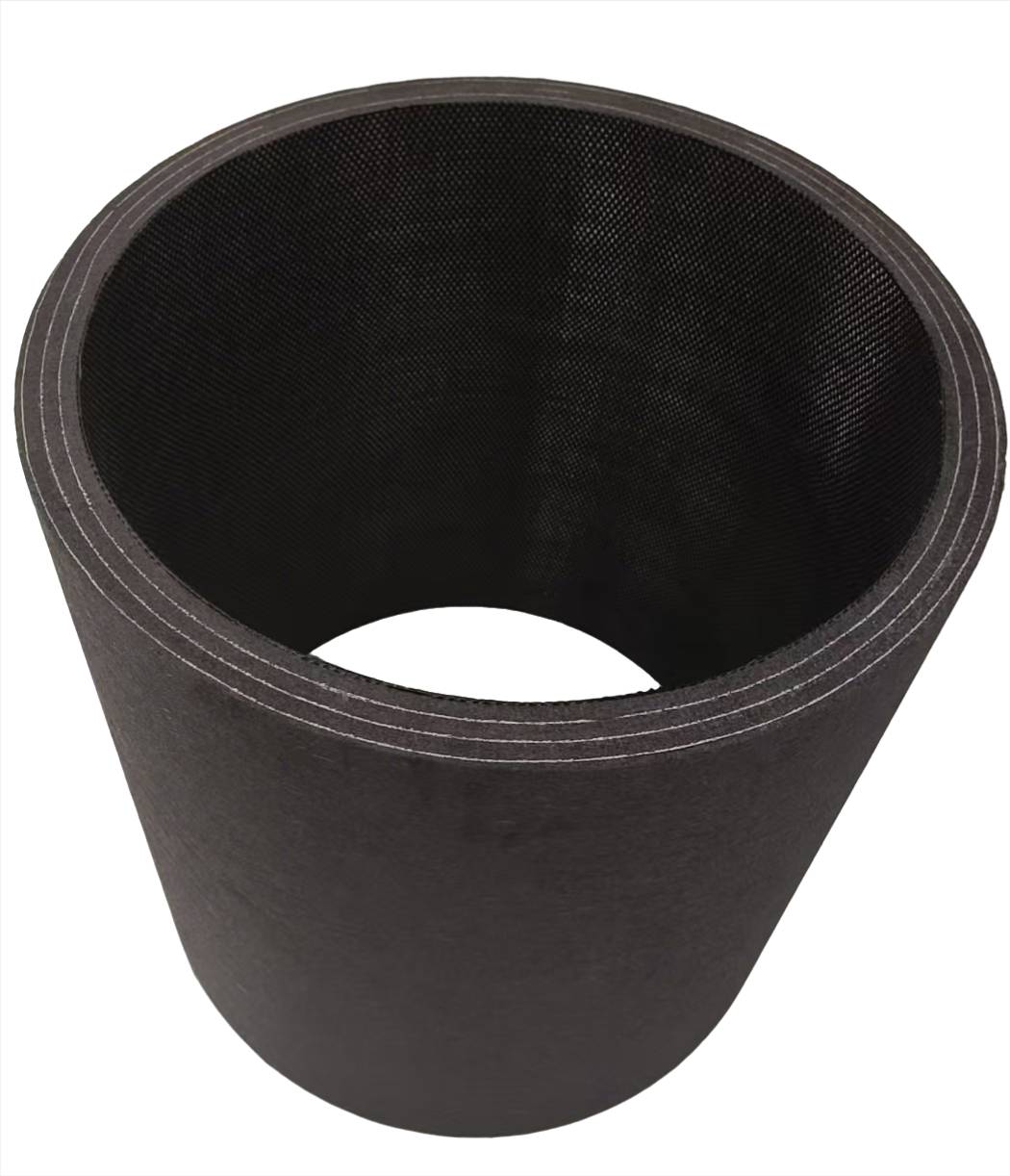
1. Composite Structure of Sandwich Carbon Fiber Rigid Felt
The Sandwich Carbon Fiber Rigid Felt features a multi-layer composite design. Each material layer contributes specific functional properties to the overall structure.
1.1 Multi-Layer Rigid Carbon Cloth: Surface Protection and Structural Reinforcement
Multiple layers of rigid carbon cloth are applied to the inner and outer surfaces of the felt structure, forming protective reinforcement layers.
Key functions include:
Erosion resistance: Helps protect the underlying felt from high-velocity gas flow and particle-induced surface abrasion.
Mechanical reinforcement: Improves the structural integrity and dimensional stability of the felt tube.
Reduced fiber shedding: Provides a protective surface that helps limit direct exposure of loose felt fibers to the furnace atmosphere.
1.2 Graphite Foil Interlayer: Thermal Management and Stress Accommodation
A Graphite Foil layer is incorporated into the composite structure to provide additional thermal and mechanical functionality.
Its main functions include:
Thermal distribution: Graphite Foil's high in-plane thermal conductivity helps redistribute localized heat and reduce temperature differences.
Stress accommodation: Its flexible layered structure can accommodate minor interlayer movement and help distribute localized mechanical stresses.
Composite integration: Works together with the carbon cloth reinforcement to support the overall structure during thermal cycling.
1.3 Gradient-Porosity Carbon Fiber Rigid Felt Core
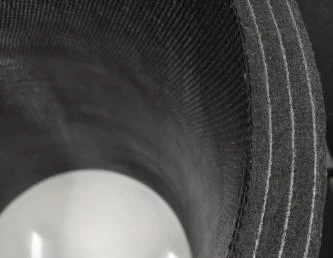
The central carbon fiber rigid felt core can be designed with a three-layer gradient-porosity structure:
Inner dense layer: Provides a relatively compact surface to help limit particle penetration.
Middle porous core: Provides interconnected pore pathways to facilitate gas movement and reduce localized gas accumulation.
Outer dense layer: Adds structural protection and helps limit the release of loose particles from the felt body.
This combination of dense surface layers and a porous central core is designed to balance gas permeability, insulation performance, and structural integrity.
2. Key Performance Features
The combination of rigid carbon cloth, Graphite Foil, and gradient-porosity carbon felt provides several functional advantages.
2.1 Enhanced Resistance to Gas-Flow Erosion
High-velocity gas flow and particle impact can gradually damage conventional felt surfaces.
The multi-layer carbon cloth reinforcement provides an additional protective barrier, helping reduce surface erosion and maintain the structural integrity of the insulation tube during operation.
2.2 Improved Gas-Flow Management
Uncontrolled gas movement inside a sintering furnace may contribute to uneven heat transfer and localized temperature fluctuations.
The porous core provides internal pathways for gas movement, while the denser inner and outer layers help regulate gas exchange through the composite structure.
The porosity and layer configuration can be customized according to furnace gas-flow direction, exhaust port positions, and operating requirements.
2.3 Improved High-Temperature Structural Stability
Repeated heating and cooling cycles can gradually affect the integrity of conventional insulation materials.
The reinforced composite structure is designed to improve resistance to mechanical degradation, fiber shedding, and dimensional changes under demanding high-temperature conditions.
2.4 Integrated Tubular Design for Customized Installation
Sandwich Carbon Fiber Rigid Felt can be manufactured as an integrated tubular component according to the customer's furnace dimensions.
Compared with insulation structures assembled from separate felt sections, the integrated design simplifies installation and reduces the need for on-site insulation assembly.
Customization options include:
Furnace chamber dimensions
Inner and outer diameters
Wall thickness
Exhaust port positions
Gas-flow direction
Operating temperature and atmosphere
3. Typical Applications
Sandwich Carbon Fiber Rigid Felt is designed for specialized high-temperature thermal processing environments where insulation stability, gas-flow management, and contamination control are important.
Typical applications include:
High-temperature sintering furnaces
Vacuum heat treatment furnaces
Powder metallurgy equipment
Industrial thermal processing systems
Customized high-temperature furnace insulation assemblies
4. Customized Carbon Fiber Insulation Solutions from XINGHUI Materials
XINGHUI Materials specializes in carbon fiber-based insulation materials and thermal field components for high-temperature industrial applications.
Our product portfolio includes:
Carbon Fiber Rigid Felt
Carbon Fiber Soft Felt
Sandwich Carbon Fiber Rigid Felt
Carbon-Carbon Composite Components
Customized Carbon Fiber Insulation Parts
We provide customized material structures and machining solutions based on furnace dimensions, operating conditions, and customer drawings.
Your Furnace Requirements. Our Customized Carbon-Based Solutions.
Contact XINGHUI Materials to discuss your Sandwich Carbon Fiber Rigid Felt requirements and application specifications.